" /> diacritic | art and culture: February 2007 Archives

« December 2006 | Main | March 2007 »

February 18, 2007

Lee Kwan Yew's Advice to Vietnam

Last year I wrote in an entry Catching up with Singapore that the IMF (International Monetary Fund) forecasted it would take 200 years to catch up with Singapore. With all inside jokes aside about the developing Phu My Hung community in South Saigon with its sanitary streets and HDB urban aesthetic as being a mini-Singapore inside Vietnam, Singaporean legend Lee Kwan Yew in a recent visit to Vietnam had some interesting and frank comments. I found his advice practical. Given that there is a sea of difference between Vietnam and Singapore, including 82 million people, his reflections on the development of youth and education, bureaucracy and corruption are refreshing.

When one reads what Mr. Lee Kwan Yew advised Vietnam to do in 2006 in newspapers, one has to admit that he was always direct. For instance, he told us to send Hanoi students to Saigon to learn how to make money, and “layer” talented southern students at universities in Hanoi. But he was even more direct when talking about Vietnam to the Singaporean media. He said that Vietnam was developing at an admirable pace, but it would take several decades for her to catch up with other developed Asian countries like Malaysia. In 2005, Malaysia’s annual income per capita was 4,960 USD, Vietnam’s was 620 USD and Singapore’s was 27,490 USD. According to Mr. Yew, Vietnam’s greatest challenges are weak infrastructure, unfair educational practice, and a weak knowledge of English. It currently costs Vietnam a lot of time and money to translate research and learning materials from English into Vietnamese. As long as Vietnamese teachers don’t teach in English, Vietnam’s education will find it difficult to develop.

Vietnamese leaders are young and enthusiastic in trying to renovate their country. But the faster they want to go ahead, the more they are hampered by bureaucracy and corruption. So what can Vietnam get from Singapore? In Mr. Yew’s opinion, Singapore’s managing system is her strongest point. The values of Singapore’s management software, experiences and skills are increasing daily, and Vietnam can make use of them. But Vietnam should figure out what she wants to do, since he always thinks that every country should find her own ways to a place in the constantly changing world.

The Vietnamese Character
So where do we start? Also on VietnamNet Bridge is an interesting article on the strengths and weaknesses of the Vietnamese character. According to the article these include:

"First, they are hard working but easy to satisfy. Second, they are smart and creative to cope with short-termed difficulties, but lack long-termed and active reasoning abilities. Third, they are dexterous but hardly pay attention to the final perfection of their products.

Fourth, they are both practical and idealistic, but don’t develop either of these tendencies into theories. Fifth, they love knowledge and have quick understanding, but hardly learn from the beginning to the end of things, so their knowledge isn’t systemic or fundamental. In addition, Vietnamese people don’t study just for the sake of knowledge (when small, they study because of their families; growing up, they study for the sake of prestige or good jobs).

Sixth, they are open-hearted and hospital, but their hospitality doesn’t last. Seventh, they are thrifty, but many times squander money for meaningless reasons (to save face or to show off). Eighth, they have solidarity and help each other chiefly in difficult situations and poverty; in better conditions, this characteristic rarely exists."

In coming years, as the Vietnamese people try to improve their lot and their nation and as the country integrates into the world community, much will have to change. How and at what pace we can only hope for the best. -RST

Further Reading
+ VietnamNet Bridge. What does Mr. Lee Kwan Yew advise Vietnam to do?
+ VietnamNet Bridge. Vietnam needs to look at herself before flying

Hanoi Art in the New York Times

Snap1.jpg
Jennifer Conlin of the New York Times covers the Hanoi Art Scene this weekend in "The Awakening of Hanoi." The article highlights some of the better known venues both contemporary and commercial, though at the expense of depth. Conlin does give a paragraph to some of the issues facing Vietnamese artists, but as with most mainstream media coverage, focuses rather the rising value of work in the commercial sector. The BBC has consistently been more daring in their coverage of contemporary Vietnamese culture scene (for example, this and that). But for art lovers planning on visiting Hanoi, this reading is a good and solid starting point. -RST

Snap4.jpg
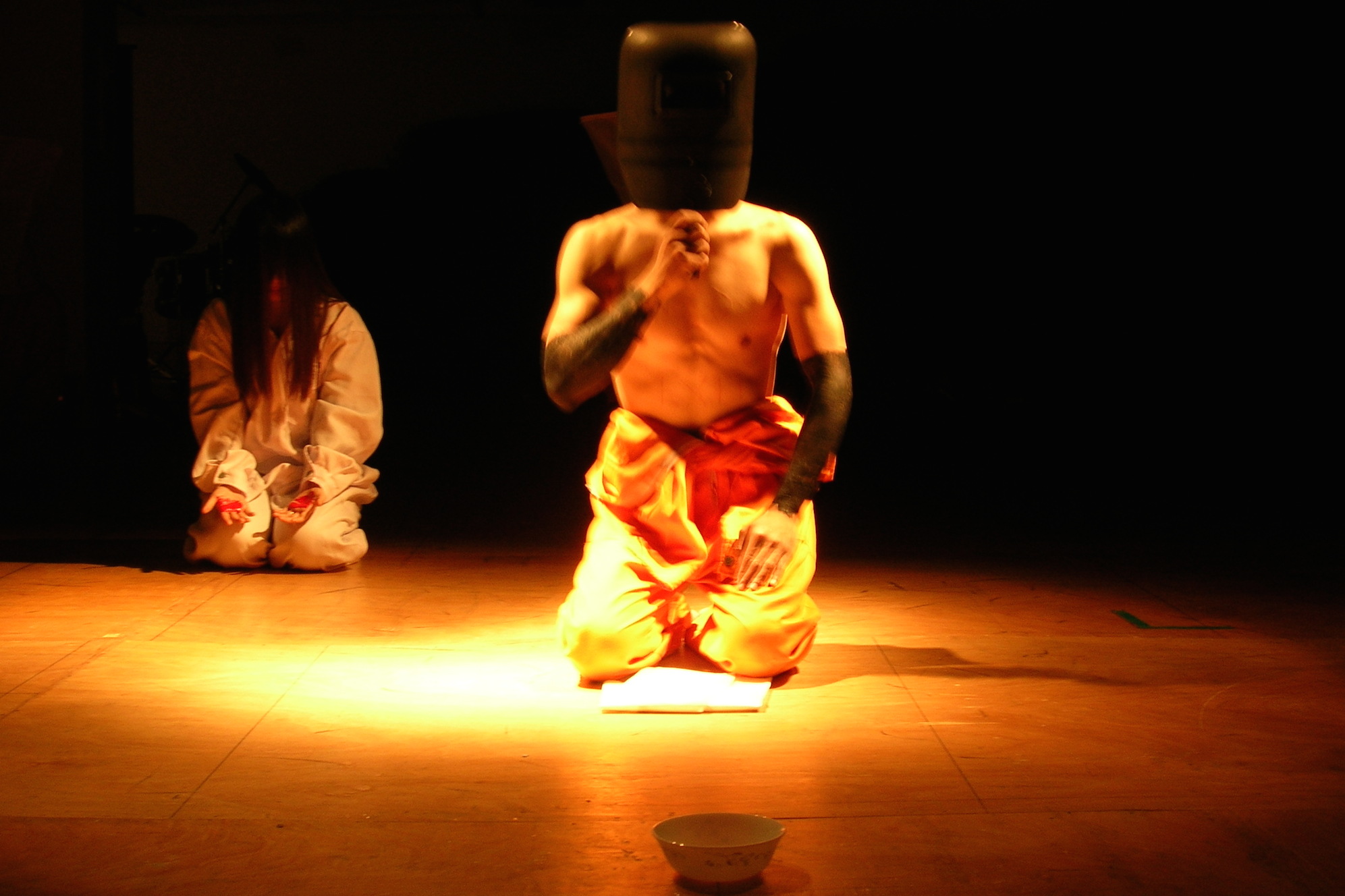
Artist Dao Anh Khanh prepares for a performance

Those interested in contemporary Vietnamese art should also be reminded that there exists a developing art community in Ho Chi Minh City (formerly Saigon). In many ways, there are parallels between both developing cities though indeed the infrastructure in Hanoi is stronger (more spaces and better support).I'd be interested in your comments after reading the article.

The full article can be accessed below, for a limited time, before it becomes an archived pay-to-access archived article. If the International Herald Tribune picks it up, it shoud remain free. You might have to register (free) with the NYT to view. *Images by James Hill for the NYT.

New York Times. The Awakening of Hanoi

February 15, 2007

A.ART in local news

After a short delay, our recent Saigon launch of A.ART was covered in Vietnam News by Jon Dillingham.

The publication aspires to improve "the quality of cultural discourse and exchange of information within Vietnam while sharing Vietnam’s own contemporary arts practice with a larger international audience," said a group statement accompanying the publication.

For more information
Vietnam News. New publication gives global voice to Vietnamese artists
mirrored on VietnamNet Bridge

February 6, 2007

Location and disability

I revisited an online bulletin for alums in my major at art school. I read a post I made two years ago responding to the question, Do you enjoy where you live? I think I still believe now what I wrote then in 2005:

+++

I've been living in Ho Chi Minh City, Vietnam for two years now. Yesterday, in a cafe, I was rereading an essay by Susan Sontag about anthropologists:

"The anthropologist's vocation requires the assumption of profound detachment. (Quoting Claude Levi-Strauss) "Never can he feel himself 'at home' anywhere, he will always be, psychologically speaking, an amputee". - Claude Levi-Strauss in Susan Sontag's "The Anthropologist as a Hero"

What struck me about what Sontag was saying is that for some artists, and certainly for me, practicing art is also an act of voluntary amputation. You know the advantages of comfortable living, yet each of us has chosen to embrace a little risk at the expense of a prescribed life. I still feel my phantom limb, those pangs of what I miss most about America (free press, bookstores, trashy television). I miss education and I miss being able to find things when I need them. But one, in time, becomes familiar with disability, locating temporary prosthetics and ultimately, one forgets that they have braces when they smile.

Certainly time spent at home offers adventures. I see it like an extreme rock climber, taking risk but always a sport of familiar terrain. Until one day, the climber finds his leg jammed between two stones. One can either waste away or one can cut themselves loose.

I can't say whether or not I've chosen the right place. My instinct tells me that Beijing, Havana and perhaps Berlin are in the future. It is clear that I'm interested interested in places undergoing rapid change. Also, in the same essay Levi-Strauss is said to believe that the anthropologist is a witness to dying culture (during a period of colonization where 'first contacts' usually meant the decimation of entire cultures through disease, warfare, slavery). Such is the practice and struggle of art. To maintain culture in a larger society that could care less. I currently live in one of only a handful of remaining communist states. To see the rapid changes, the growing pains, the struggles of nations and cities in transition is the energy from which my work borrows. I'm never really 'at home' anywhere, but that, for me, speaks to an artist's life. And that is why I like where I live.

February 1, 2007

A.ART Saigon Launch

mogas_saigon_casa.jpg

Tác phẩm sẽ trưng bày đến ngày 16 tháng 2.
Triển Lãm 2 tháng 2, 1800-2100 giờ
Khanh Casa
11 Mai Thi Luu
District 1, HCMC

Mogas Station là một nhóm hoạt động nghệ thuật tại thành phố Hồ Chí Minh. Thành viên của nhóm là những người làm công việc sáng tạo từ nhiều ngành nghề khác nhau và hiện đang phát triển các hoạt động ở Việt nam nhằm quảng bá và giới thiệu nghệ thuật đương đại. Hơn một năm qua, nhóm cùng nhau thực hiện dự án Ạart.

Ạart là một ấn phẩm mang tính xã hội. Mục tiêu chính của Ạart là cố gắng nâng cao chất lượng của các diễn đàn văn hoá, và trao đổi thông tin ở Việt nam đồng thời đưa các hoạt động nghệ thuật đương đại của Việt nam đến công chúng quốc tế. Vì thế, ấn phẩm được xuất bản song ngữ, bằng tiếng Anh và tiếng Việt.

Bề ngoài, Ạart được trình bày như một tạp chí văn hoá thông thường. Tuy nhiên, nguỵ trang trong hình thức đương đại và dễ tiếp cận đó là sự lựa chọn nội dung và hình ảnh kỹ càng, về nhiều lĩnh vực sáng tạo trong nghệ thuật thị giác, văn chương, âm nhạc, phim, thiết kế thời trang và kiến trúc. Ạart chính là khởi điểm cho một đối thoại mang tính phê bình hơn trong nghệ thuật và văn hoá, đề xuất những ý tưởng từ Việt nam và vượt xa hơn thế.

Mỗi cuốn Ạart sẽ tập trung vào một chủ đề chính qua các tác phẩm và bài viết được thực hiện đặc biệt. Chủ đề của số ra mắt là “Nguỵ trang.” Ấn phẩm này đã được liên kết xuất bản với Singapore Biennale 2006 và Viện Gớt Hà nội. Nó đã được giới thiệu tại Singapore Biennale 2006 và sau đó đã ra mắt tại Viện Gớt Hà nội tháng 11 năm 2006.

Thành viên nhóm Mogas Station:

Tâm Võ Phi, kiến trúc sư (Việt kiều Pháp)
Gulschan Gothel, kiến trúc sư và nhiếp ảnh gia (Đức)
Bertrand Peret, nghệ sỹ (Pháp)
Rich Streitmatter-Tran, nghệ sỹ (Việt kiều Mỹ)
Jun Nguyen-Hatsushiba, nghệ sỹ (người Mỹ, gốc Việt và Nhật bản)
Vũ Liên Phương (Việt nam)
Hoàng Dương Cầm, nghệ sỹ (Việt nam)
Sandrine Llouquet, nghệ sỹ (Việt kiều Pháp)

°°°°°
Mogas Station is happy to invite you to the
Ho Chi Minh City launch of Ạart

accompanied by a photography work by Gulschan Gothel
at Khanh Casa,
on Friday, February 2, 2007 from 6pm to 9pm.
The work will be visible from February 2 to 16.

Khanh Casa
11 Mai Thi Luu
District 1, HCMC

Mogas Station is an artist collective based in Ho Chi Minh City. The group is a assemblage of creators coming from diverse backgrounds and now developing activities in Vietnam to promote and present contemporary art. For more than one year they have been working on the Aart project.

Ạart is a publication which aims to be socially useful. The main goals of Ạart are to succeed in improving the quality of cultural discourse and exchange of information within Vietnam while sharing Vietnam’s own contemporary arts practice with a larger international audience. To meet these goals, the publication is bilingual in English and Vietnamese.

On the surface, Ạart is arranged like a popular culture magazine. Yet its accessible and contemporary appearance camouflages a serious choice of texts and images dealing with many fields of contemporary creation in the visual and graphic arts, literature, music, cinema, fashion design and architecture. Ạart aims to be a starting point for a more critical dialogue about arts and culture, providing ideas both within Vietnam and beyond.

Each volume of Ạart will respond to a central idea with specially commissioned art works and articles. The topic for the premiere issue is “Camouflage”. This issue has been published in collaboration with Singapore Biennale 2006 and Goethe Institut, Hanoi. It has been presented for the Singapore Biennale 2006 and then launched at the Goethe Institut, Hanoi, in November 2006.

Mogas Station Members:

Tam Vo Phi, architect (Vietnamese-French)
Gulschan Gothel, architect and photographer (German)
Bertrand Peret, artist (French)
Rich Streitmatter-Tran, artist (Vietnamese-American)
Jun Nguyen-Hatsushiba, artist (Vietnamese-Japanese-American)
Vu Lien Phuong (Vietnamese)
Hoang Duong Cam, artist (Vietnamese)
Sandrine Llouquet, artist (Vietnamese-French)