Body without Organs (BwO)

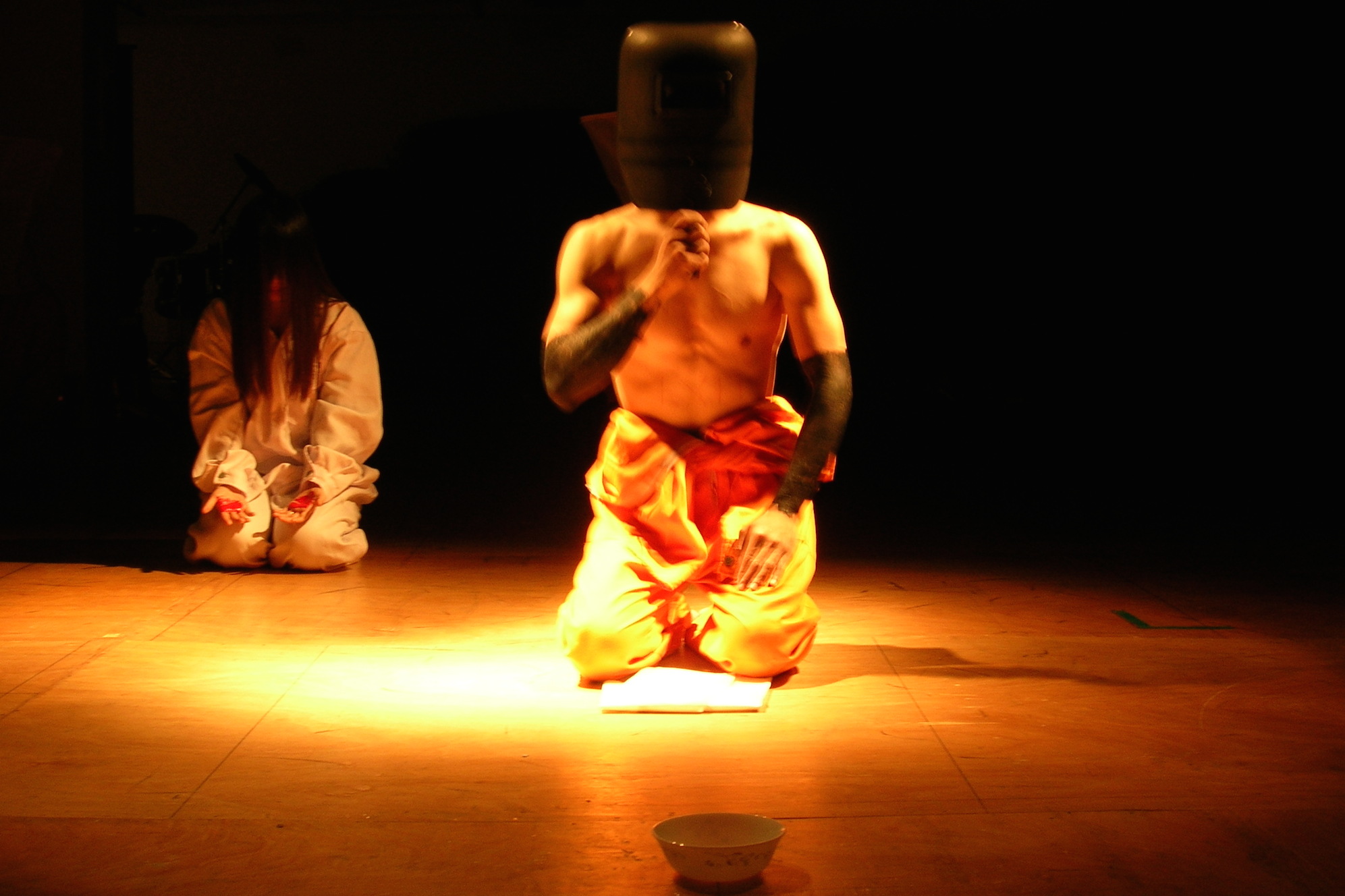
Of my performance work it always returns to the same question directed at me. "Why do it and does it hurt?". And it is one question rather than two for which there are indirect responses and obvious responses. Responding indirectly is a text excerpted from the masterwork of Gilles Deleuze and Felix Guttari, A Thousand Plateaus: November 28, 1947: How Do You Make Yourself a Body without Organs?
+++
On November 28, 1947 Artaud declares war on the organs: To be done with the judgement of God, "for you can tie me up if you wish, but there is nothing more useless than an organ."1 Experimentation: not only radiophonic, but also biological and political, incurring censorship and repression. Corpus and Socius, politics and experimentation. They will not let you experiment in peace.
The BwO: is already underway the moment the body has had enough of organs and wants to slough them off, or loses them. A long procession. The hypochondriac body: the organs are destroyed, the damage has already been done, nothing happens anymore. "Miss X claims that she no longer has a brain or nerves or chest or stomach or guts. All she has left is the skin and bones of a disorganized body. These are her own words."2 The paranoid body: the organs are continuously under attack by outside forces, but are also restored by outside energies. ("He lived for a long time without a stomach, without intestines, almost without lungs, with a torn esophagus, without a bladder, and with shattered ribs, he used sometimes to swallow part of his own larynx with his food, etc. But divine miracles ('rays') always restored what had been destroyed."3 The schizo body, waging its own active internal struggle against the organs, at the price of catatonia. Then the drugged body, the experimental schizo: "The human body is scandalously inefficient. Instead of a mouth and an anus to get out of order why not have one all-purpose hole to eat and eliminate? We could seal up the nose and mouth, fill the stomach, make an air hole direct into the lungs where it should have been in the first place."4 The masochist body: it is poorly understood in terms of pain; it is fundamentally a question of the BwO. It has its sadist or whore sew it up; the eyes, anus, urethra, breasts, and nose are sewn shut. It has itself strung up to stop the organs from working; flayed, as if the organs clung to the skin: sodomized, smothered, to make sure everything is sealed tight.
Why such a dreary parade of sucked-dry, catatonicized, vitrified, sewn-up bodies, when the BwO is also full of gaiety, ecstacy, and dance? So why these examples, why must we start there? Emptied bodies instead of full ones. What happened? Where you cautious enough? Not wisdom, cuation. Many have been defeated in this battle. Is it really so sad and dangerous to be fed up with seeing with your eyes, breathing with your mouth, talking with your tongue, thinking with your brain, having an anus and larynx, head and legs? Why not walk with your head, sing with your sinuses, see through your skin, breathe with your belly: The simple Thing...
Where psychoanalysis says, "Stop, find your self again," we should say instead, "Let's go further still, we haven't found our BwO yet, we haven't sufficiently dismantled our self." Substitute forgetting for anamnesis, experimentation without interpretation. Find your body without organs. Find out how to make it. It's a question of life and death, youth and old age, sadness and joy. It is where everything is played out.

Source
Gilles Deleuze and Felix Guttari. A Thousand Plateaus. London: Continuum Books, 1987.
1 [Trans: Antonin Artaud, "To Have Done With the Judgement of God," Selected Writings, ed. Susan Sontag (New York: Farrar, Straus and Giroux, 1976), p. 571.]
2 [Trans:Jules Cotard, Etard sur les maladies cérébrales et mentales (Paris: Braillière, 1891).]
3 [Trans: Dr. Schreber's Memoirs, quoted by Sigmund Freud, Notes on a Case of Paranoia, vol. 12, Standard Edition, trans. James Strachey (London: Hogarth Press, 1957), p. 17.]
4 William Burroughs, Naked Lunch (New York: Grove Press, 1966), p.131.