" /> diacritic | art and culture: March 2006 Archives

« February 2006 | Main | April 2006 »

March 31, 2006

Talk talk talk. Shut up and do something

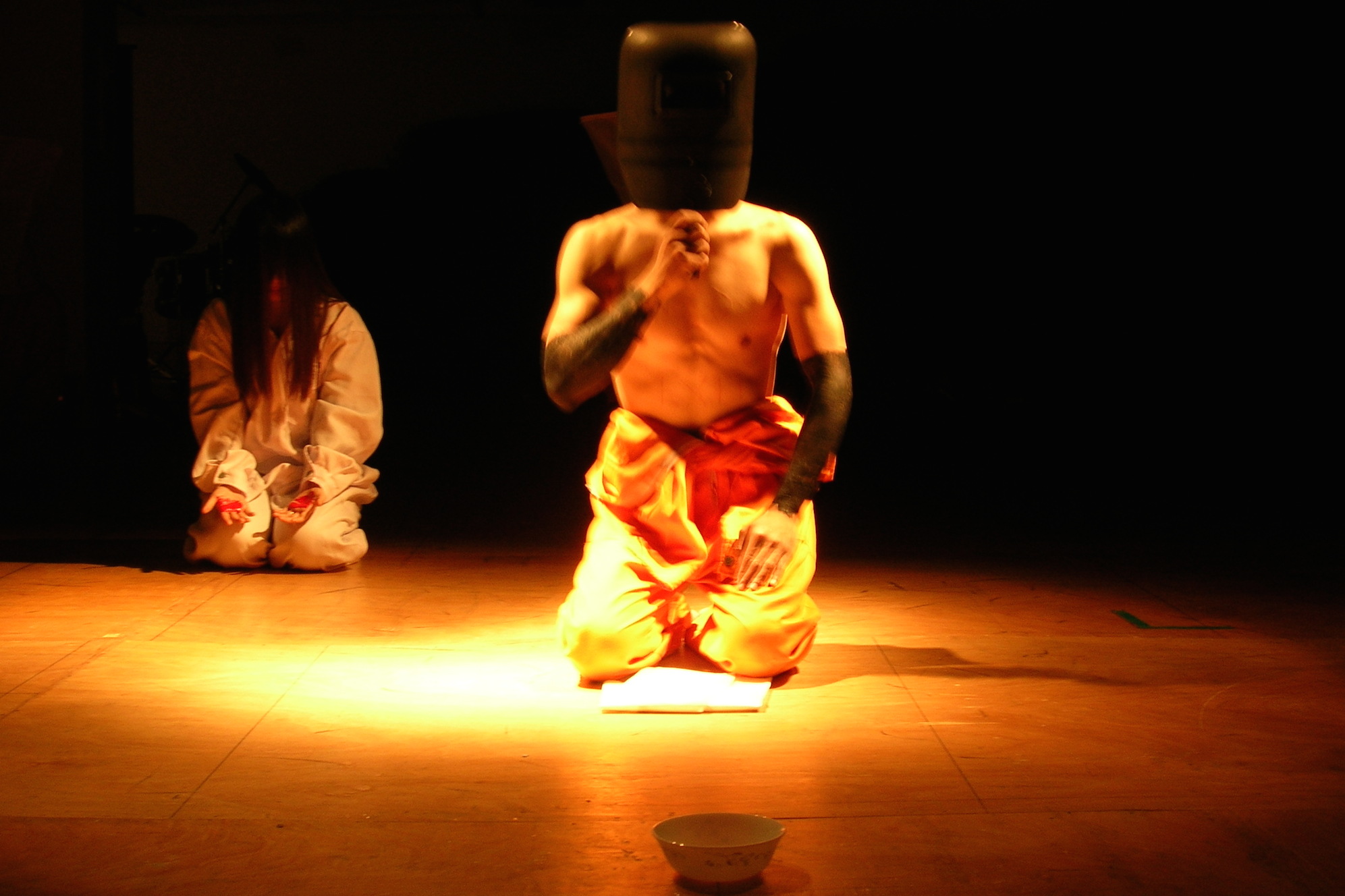
r. streitmatter-tran speaks about his work at albb

Last evening at albb, for the first time in over two years, I gave survey presentation of my work. Days prior, I went through old directories and dv tapes scrounging for higher resolution images. I found many things I had thought long lost (particularly in DV) and could not for the life of me find recent things I knew I had.

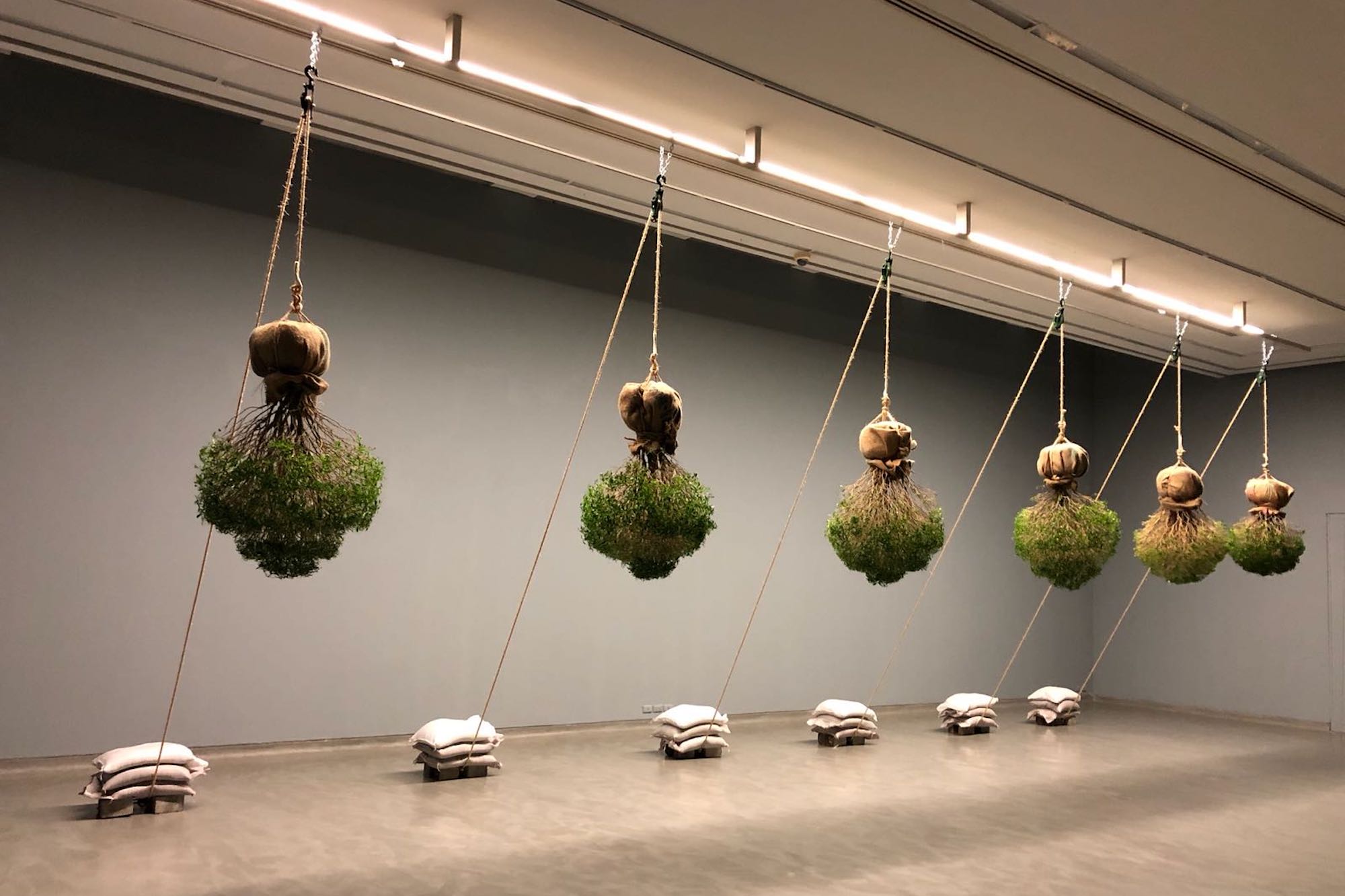
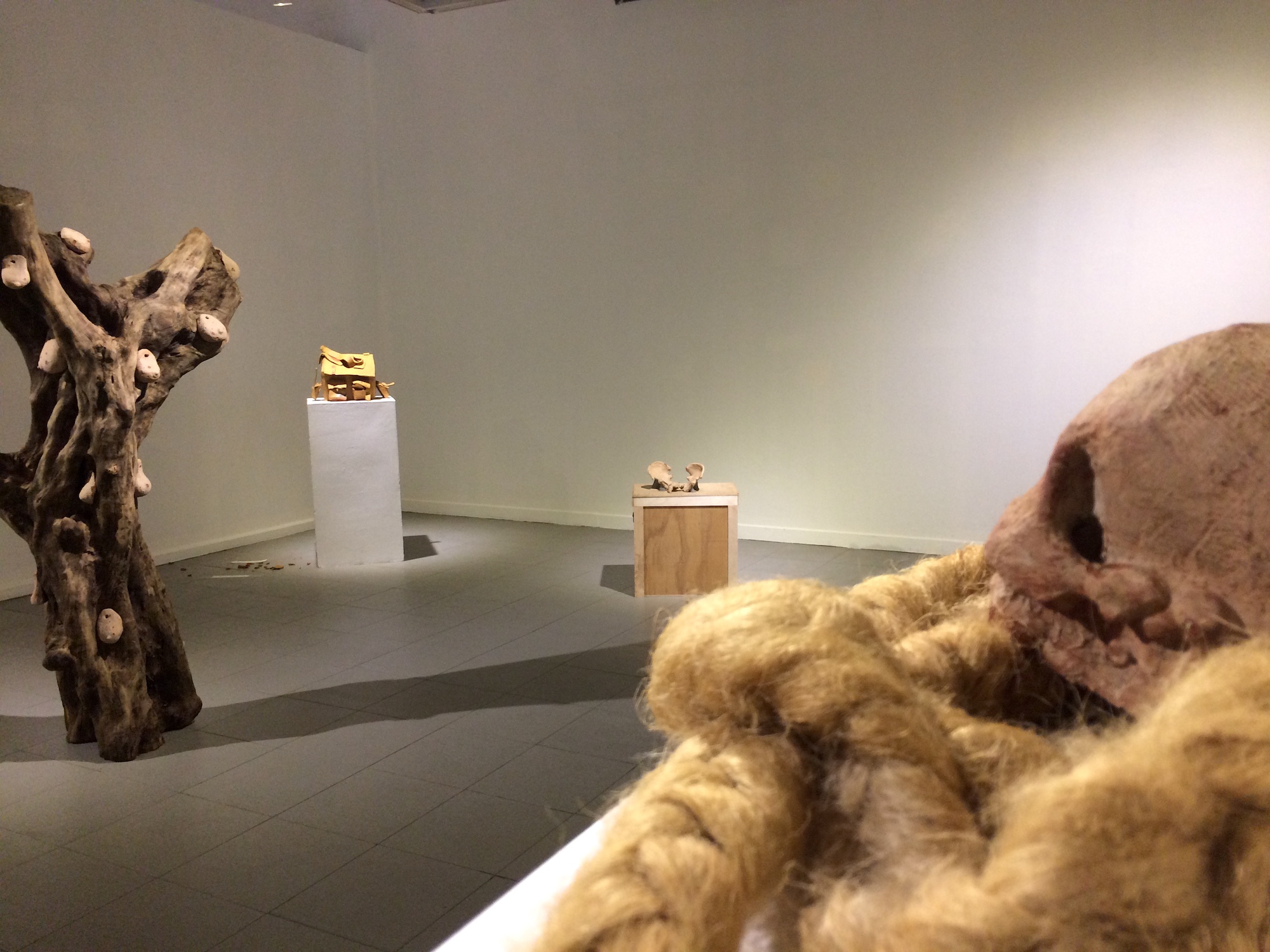
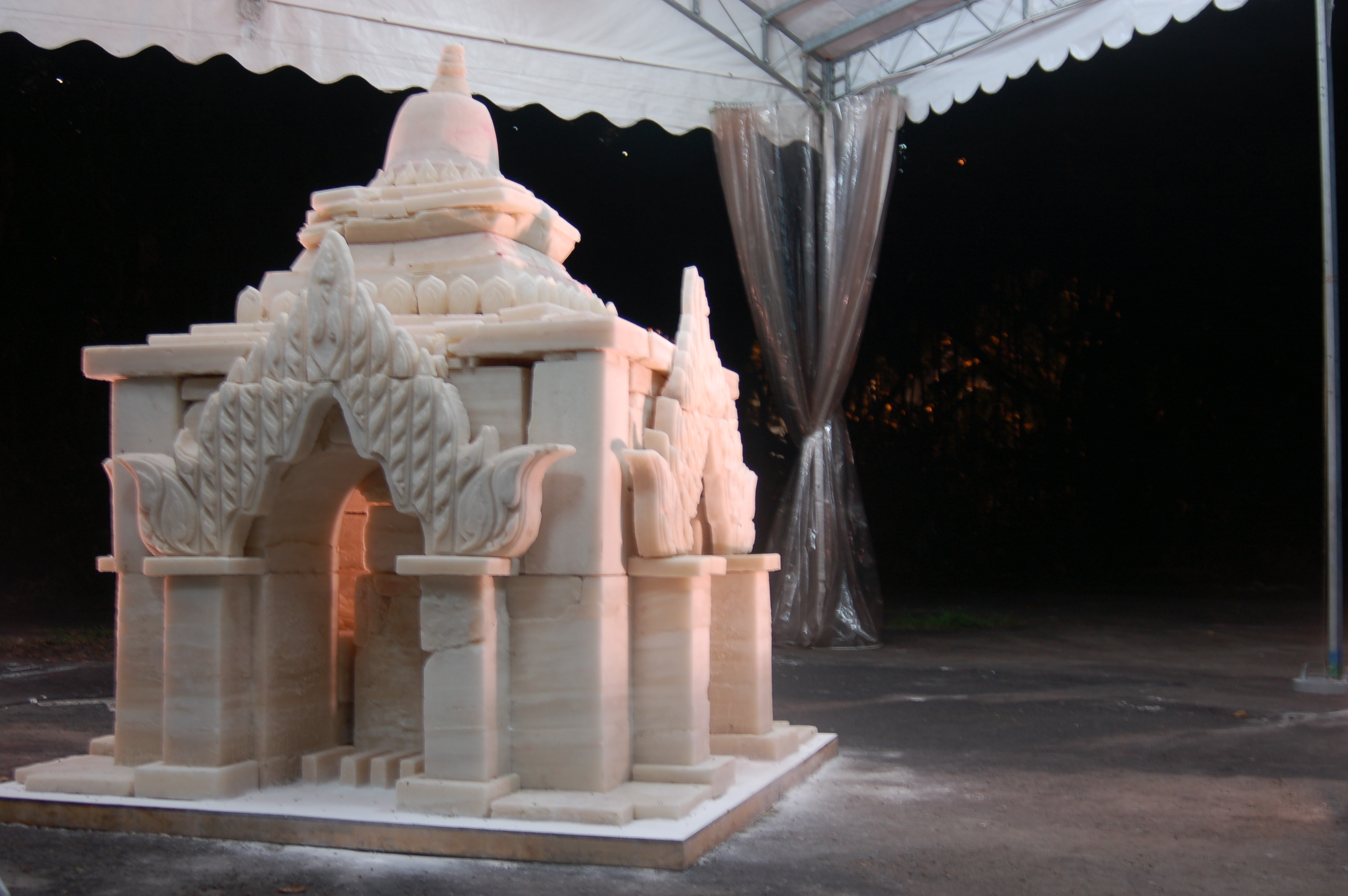
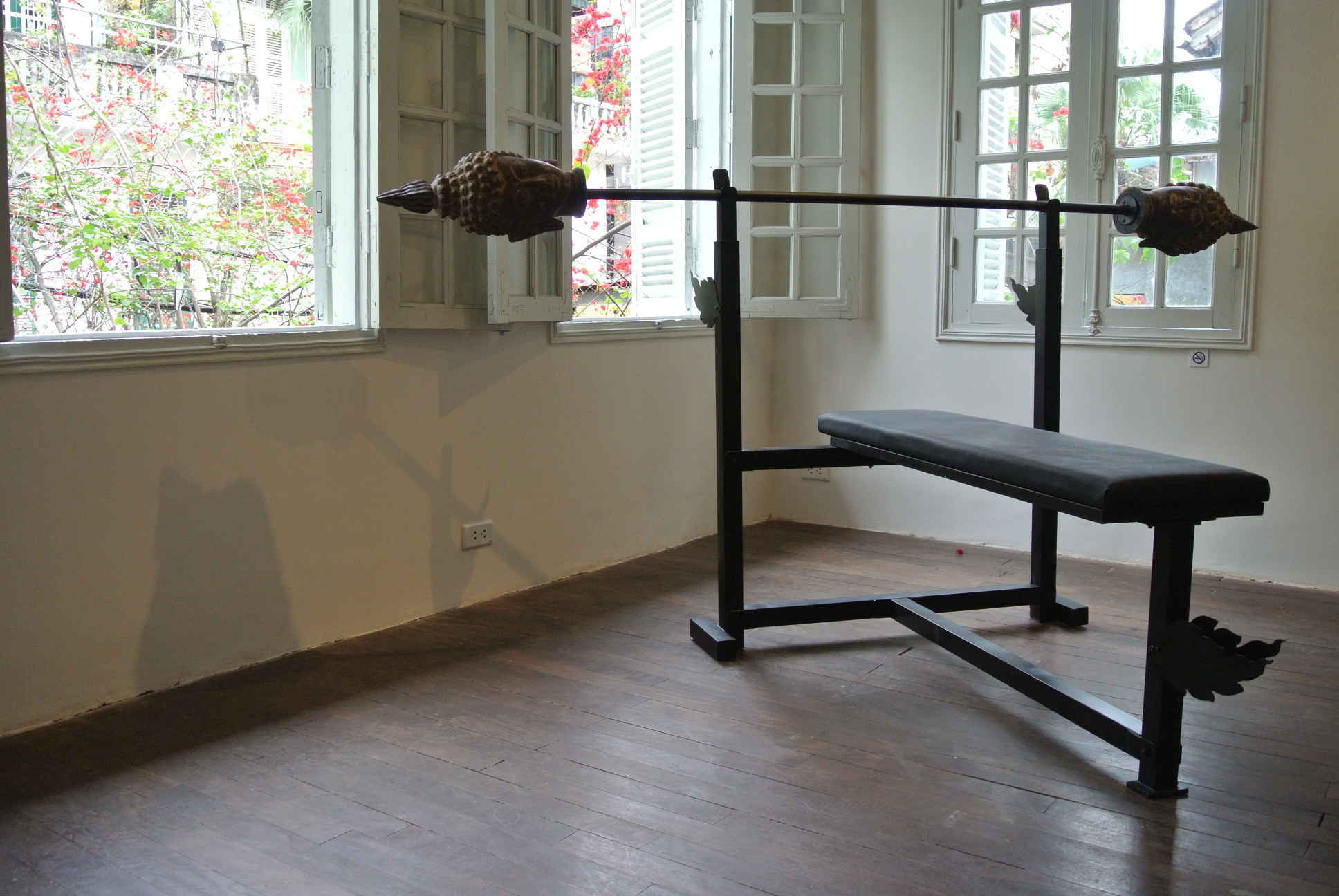
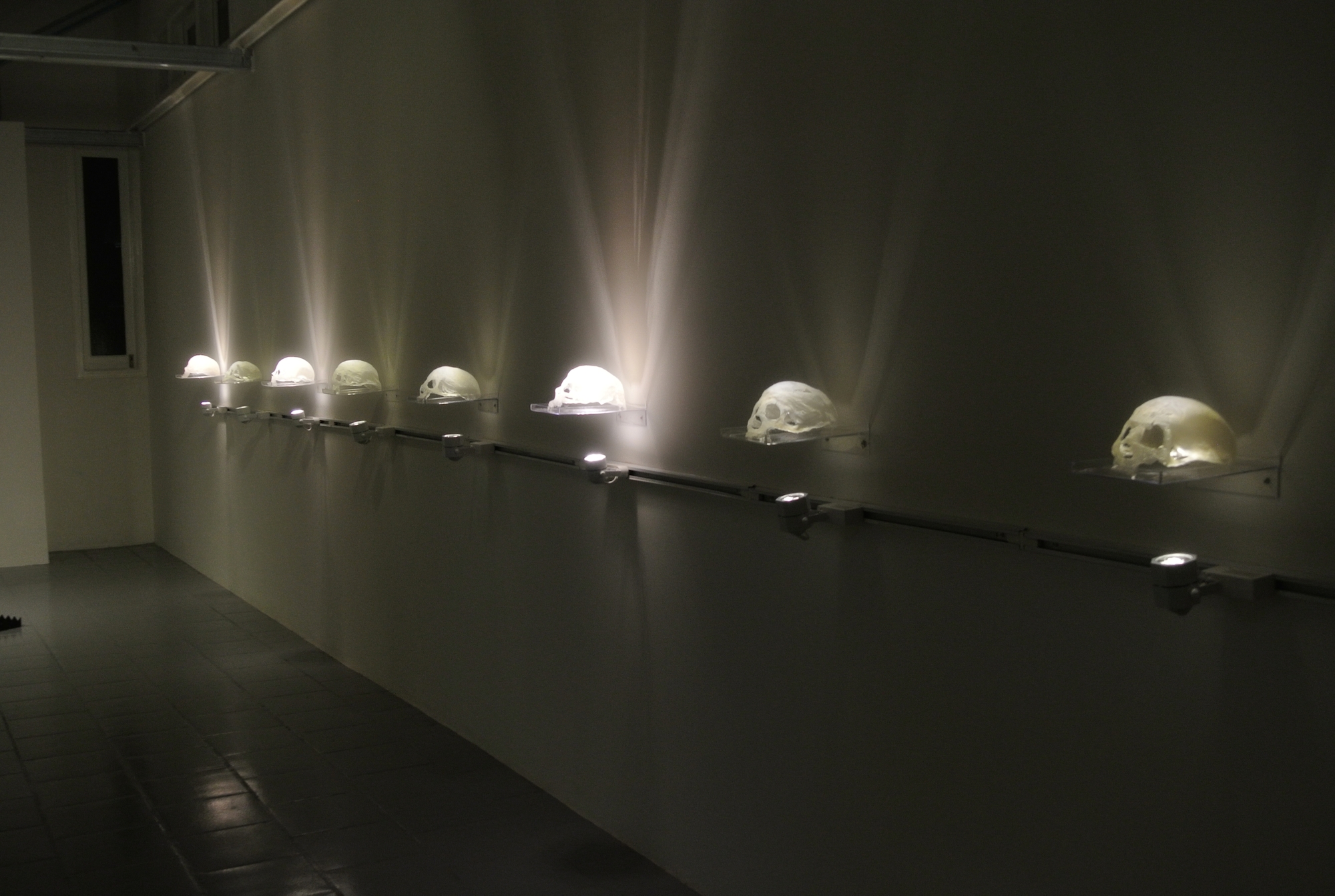
Yesterday's presentation covered a span of nearly 7 years of work beginning with my days as an art student until now. I arranged the work mostly through form: Art Performance, Installation Art, Art Interventions, Media Art and Video, Painting and Photography, and Shared Learning (teaching positions, lectures, grants and alternative/group/community projects). I rushed through the presentation and was told that I wasn't loud enough. I hate doing these things on PowerPoint (in spite of having discovered how to extend the desktop so as to simultaneously present the slideshow through the projector and the presenation file itself on the laptop screen).

THE EUNICH

I realized that much of the rawness and experimental power that used to exist in my work is now missing. It's not only about getting naked (for those of you at the presentation); its about the way I feel about doing things now. Apparently in a trade-off, the physical or emotional qualities that used to identify my work have increasingly been replaced by intellectual vapor. Connecting my work to issues without rechanneling the energy back into the body has left my work souless. People would "hmm" and "ah, i see" rather than "damn!" To be honest, I don't really enjoy this transformation, which was apparent to me after the talk. I want to get down. I want to howl and destroy things again. I want to perform like an epileptic with tourette syndrome on crack, again. Now, I just feel like art pussy. Some changes are in order. Time to grow some.

talk talk talk. shut up and do something

More Info
Blog. Motoko Uda

March 28, 2006

600 Images Exhibition in Saigon

600images-exhib.jpg

The 600 Images Project makes its last exhibition in Saigon on March 28, 2006 - after shows in Berlin, Los Angeles, London, Manila, and Bangkok. What a great evening! 

March 26, 2006

Peformance Art in Burma

printemps_burma.jpg

Le printemps des Poetes
Festival de Performance/Performance Art Festival

1 April 2006
10 am - 1 pm: Symposium
2 pm - 3 pm: Press Conference
3:30 pm - 9 pm: Performance and Poetry

Alliance Francaise
340, Pyay Road
Yangon, Myanmar
TEL: 536900, 537122, 535428
alliance@cccl-rgn.net.mm

March 25, 2006

Korean Vietnamese Art Collaborations

koreanpeaceproject-aw.jpg

Recently the Korean art team of Kim Kang (curator, artist), Park Chan Yeng (Director, Stone & Water supplemental art space), Lee Seungmi (Director and Curator, Jebiwool Art Museum), and Lee Hyun Ju (Curator, Center for Peace Museum) were in Vietnam for a week to discuss future arts collaborations. During their one-week stay in Vietnam, they met with several Saigon-based artists and organizations including Atelier Wonderful, albb, Nguyen Nhu Huy and Galerie Quynh. If funding can be secured, there will very likely be some interesting activities in Saigon and Seoul in the near term.

More Information
+ Jebiwool Art Museum, Korea
+ Center for Peace Museum, Korea
 

March 23, 2006

Atelier Wonderful: Dirty Hands

fly khanh.jpg

Dirty Hands, Bui Cong Khanh

This Saturday, Atelier Wonderful is hosting a proposal from visual artist Bui Cong Khanh. His work, presented many times in Vietnam and abroad (Busan Bienniale in Korea, Asiatopia in Thailand, NIPAF in Japan, Vermont Studio in the US...) takes simultaneously two main directions.

The first direction shows the artist's deep anxiety about a world being dominated by profit. Via performance and obvious symbols of capitalism using (bills, Coca Cola), he communicates his message in a extremely direct way.

The second direction Bui Cong Khanh follows is more classic - drawing or painting on canvas. It's another approach, more spontaneous, in which the artist grants himself the freedom to express his actual feelings and emotions, immediately and without hesitation. In this manner he strives for the merging the concerns of the first as he undertakes to draw on the wall itself, with charcoal, thus maintaining the possibility of a non commercial art – as fleeting as a performance itself.

From 10am to 6pm : Dirty Hands, wall drawing realized at Atelier Wonderful

At 2pm : Bui Cong Khanh will present and comment the performances he did these last years in Cambodia, Thailand and Japan.

°°°°°
Created by Wonderful District, Atelier Wonderful is a new place dedicated to contemporary creation in Ho Chi Minh city. It opens its doors every saturday for students, creators and art lovers who want to meet, share ideas and get information. Atelier Wonderful is neither a gallery nor an art center, it gathers different aspects in the compact space of a small artist studio :

-a small lounge, offering a display of documentation that can be consulted on place (art books, magazines, DVDs, digital data bank about artists),

-a workshop, which will accomodate regular presentation of artists' works or cultural actors' talks.

atelier wonderful - 80 Nguyen Trai -1st floor - w.Ben Thanh -dist.1 - HCM City - http://www.wonderfuldistrict.org
 

March 22, 2006

Art Tech Media 06:

donkukblog.jpg

My lastest video work, Dongkuk, will be shown at Art Tech Media 06. ATM 06 occurs in several cities including Barcelona, Madrid and Bilbao. See earlier entry about the video.

arttechmedia06.jpg

ART TECH MEDIA 06 is a Meeting of Artists, Museum Directors, Art Centres, Media Lab, Thinkers, Curators, Gallery owners, Collectors, Cultural Agents, Politicians and Society, in many cases, confused by the methods and concepts which are so different from the traditional ways of producing of art, its exhibition, collecting, and way of contemplating.

ART TECH MEDIA 06 was born with the intention of reflecting, analyzing and viewing art produced using new technologies in Spain within an international context, and the impact that our polyhedric altered reality has on their widespread use.

It will be developed in different sections: Lectures, Round Tables, official announcements for video artists from all over the world, and exhibitions in the participating venues.

AIMS [índice]

- Contributing to debate on art and new technologies.
- Democratizing culture in order to bring it closer to cities.
- Collaboration of Museums and Art Centres in the production of cultural events and exhibitions.
- Entering into the relationships between artists and the world of art.
- Exhibition selected from video art collections of the participating Museums, curators and official announcements.
- Encouraging the participation of the public as an active agent.
- Edition of a book including the conclusions of debates, artists participating and data base.
- Distribution and presentation of this book in Universities and Art Centres.

Information
>> ART TECH MEDIA 06
>> View Dongkuk (flash player required)

Mak Remissa at Java Gallery, Phnom Penh

antfish.jpg

Photographer Mak Remissa
will exhibit his latest series, Antfish at the Java Cafe and Gallery.

Opening Wednesday 6-9pm
March 22, 2006
Showing March 22 - April 30, 2006
At Java Cafe and Gallery
Phnom Penh

Presentation and Q&A with Artist
Wednesday March 29, 2006
Khmer 5 pm
English 6:30 pm

www.javaarts.org
56 E1 Sihanouk Boulevard, Phnom Penh, Cambodia
T: 023-987-420 or 012-833-512


Girls behind windows

shadowstreetart.jpg

I don't know who did this or for what reason, the but the mid-day effect was interesting. It's not in an art space. A free coffee to the first person who can identify where this picture was taken in HCMC. -RST
 

March 21, 2006

Hangul and Octomatics

octohangul.gif

The brain uses different areas to process numbers and language. In purely visual terms the two processes merge in octomatics and hangul, shown above. Each involves (in the case of hangul, had involved) an entirely new way of thinking about how we translate throught into writing. Speaking as a designer, both systems are extremely elegant, frugal and beautiful. Whether or not they surpass other models will be for you to decide. 

OCTOMATICS

octo-calc.gif octo-calc-anim.gif

From Digg "What do you think: Why do we have the decimal system in our western world? Because of our 10 fingers? Why do we have 7 days a week? Why are 60 seconds 1 minute and 60 minutes 1 hour? Why do we have 24 hours a day and 31 or 30 days a month? Do you think that's a really good solution? Well, here is another one: Welcome to octomatics!

"The octomatics-project is about a new number system which has a lot of advantages over our old decimal system. The name comes from the mixture of 'octal' and 'mathematics'."

HANGUL 

hangul.jpg

Many written language experts still awe at the both the simplicity and complexity of the Korean written language known as Hangul.

Korean writing is an alphabet, a syllabary and logographs all at once. Each word is made from alphabet letters that combine into syllables,which are combined into a compact character block.

The hangul script, literally, the 'Great Letters', sometimes called Onmun, shows the ingenuity possible when an orthography is carefully designed to be frendly to its users at every point. Letter names signify their sounds, and the shape of each symbol was supposedly designed to represent its phonetic articulation (although others claim anecdotally that the shapes were taken fortuitously from the design of a lattice that happened to be around.)

The simple 24 letters of the script represent the phonemes of the language. They build up logically to make about 120 very common syllables and nearly 400 in common use, making around 2000 altogether of mostly square-framed syllable blocks, by stacking the geometric shapes of the consonants on to the bar shapes of the vowels, either horizontally or vertically, The blocks have the memorable visual qualities of gestalts, like simple Chinese characters, but with very different constituents.

This orthography suits the Korean language, which is composed mostly of polysyllabic morphemes, with an elaborate inflexional system based on suffixes. I. Taylor (1980) found that the three levels of complexity in hangul characters were better for discriminating and recognising syllable blocks than single levels. The syllables then string into words, with wider spacing between the words, and this facilitates word recognition within the sentences. Logical distinctions reduce homographs. Western scholars have admired its phonetic accuracy, perfect match to the language, internal structure and its 'sheer creativeness'. Dictionaries are not needed for spelling.

Information
Infoverse. Octomatics
Essay. The 'Great Letters' of the Korean writing system

March 20, 2006

No Show: Overseas Vietnamese Films

For the past several months, the Vietnamese press has covered the success of the overseas Vietnamese film, Buffalo Boy, as it swept awards in the international film festival circuit. With each prize it garnered, the film was featured as a top-level story in the culture and entertainment sections of the main Vietnamese news sources such as Tuoi Tre, VN Express and Thanh Nien.

Apparently oblivious to the merits of a more mature national film industry, the Vietnamese Ministry of Culture and Information (MCI) has drafted a bill that would prohibit overseas Vietnamese filmmakers from releasing films within Vietnam. The xenophobic draft has been met with resistance from those actually working in the film industry and has found allies in the government who cannot frankly understand how such backward proposition could be made when clearly the film and entertainment sector is booming.

"Though the Vietnam film industry is developing a more open and international character, MCI still views Viet Kieu filmmakers with suspicion because they “do not live in Vietnam”. -VietnamNet

"Vietnam's first cinematography bill, still under draft, allows only Vietnamese citizens to make films within the country for release, setting off a wave of protests from the film fraternity." -Thanh Nien


From VietnamNet News:

Nguyen Phuc Thanh, Director of MCI’s Cinema Department said: “We’ve already allowed private film companies to be opened, but not yet Viet Kieu companies. Viet Kieu do not live in Vietnam so they do not know well the nation’s real customs and situation. If they establish companies here, they would make complications.”

Mr Thanh’s explanation was immediately rejected by renowned artists. People’s Artist, Director Huy Thanh, said: “How can Mr Thanh think that way? Speaking plainly, many domestic directors are much worse than Viet Kieu at making films on Vietnam. Very good films such as Mua Len Trau (Buffalo Boy) or Thoi Xa Vang (Time far away) won many prizes from international film festivals. They were all produced by Viet Kieu.”

Sharing that view, Nguyen The Thanh, Deputy Director of the HCM City Culture and Information Department, said: “Now is the time that the government should allow Viet Kieu to open their own film companies. They were already allowed to share nation’s educational projects. Why not cinema?”

Meanwhile, the press continues to feature the government's dedication to the development of film as this week's articles, Vietnamese embraces young film directors and Top Vietnam film award for The Quiet American star show.

Sources
VietnamNet. Producers, officials in row over Viet Kieu film laws
VietnamNet. Vietnamese films screened at France’s international film festival 

March 19, 2006

Catching up with Singapore

nanjofumio.jpg

For the past two days, Mr. Fumio Nanjo, Artistic Director of the Singapore Biennale 2006, was in Ho Chi Minh City in connection with this September's event. Given an extremely short time in Saigon, he was able to meet with many people including Atelier Wonderful, ALBB, Galerie Quynh and Saigon Open City. His visit is perhaps one reason why I noticed the news article below:

Two centuries for Vietnam to catch up with Singapore
16/Mar/2006 Tien Phong Online

It may take Vietnam almost 18 years to catch up with Indonesia, 34 years with Thailand and 197 years with Singapore, said IL Houng Lee, chief representative of International Monetary Fund.

After twenty years of innovation, it's time to raise a question: When can Vietnam catch up with countries in the Asean region and by what way?

The connections are uncanny. The Singapore Biennale is receiving government funding to coincide with the IMF meeting in Singapore in September. Without the IMF, perhaps the biennale would not have been possible. When the IMF says that Vietnam is 200 years behind Singapore, what does that say? For a perspective, let us consider what happened in 1806. Really nothing. 1806 was perhaps the most boring year in history. As a rallying call and a first step to catch up with Singapore, we need to make cultural activity in Vietnam memorable lest we throw back to the stone age.

Info
Singapore Biennale 2006

March 18, 2006

Visual Media Literacy

tiananmen_tank.jpg

Ms. Lee, a Hong Kong school teacher, showed this image above to first-year middle-school students and asked them to decipher the meaning. In three separate classes, they believed the image was of the war in Iraq.

Did they ever imagine that this horrible experience had occurred previously in the "flourishing" motherland of today!? "Have you seen this photograph before?" I asked.

In each class, there were maybe one or two students who raised their hands to say: "Oh, this seems to be a June 4th photograph." "Did your elementary school teachers tell you about June 4th?" No. Of course, the syllabus would not include any historical incident with an "unsettled verdict."

LfC: "If one is unable to associate the images with the Tiananmen Massacre, there are two possibilities: either one has been living outside China and has never been exposed to news media since 1989, or one is living in China."

Given the current state of information and education in Vietnam, I suspect that if a similar test were given to students here, the results would be sadly as dismal.

Source
ESWN. Tiananmen Tank Men

March 17, 2006

Abstractsolute

abstractsolute.jpg

*
ABSTRACTSOLUTE
by Nguyen Lan Phuong.
March, Friday 31, 2006 - 6:00 - 8 :00 PM
Himiko Saloon
88 Huynh Tinh Cua st, Ward 8, District 3, HCMC.
( 60/2 Ly Ching Thang st, Ward 8, District 3, HCMC )
       
Exhibition continues through April, 30, 2006.
 
Contact: himiko.nguyen@gmail.com
Mobile Phone: 0958 881908
Open : Monday - Sunday, 08 am - 11pm

Boot

boot.jpg

*
BOOT : From graffiti to wall painting – Session 2
Saturday, March 18th, from 10am to 6pm

Studio
For this second session centered around graffiti, Atelier Wonderful has offered up its walls for the use of some local graffiti artists : they are BOOT group (Duy Thông, Thành Lân, Thao Nguyen, students from the Fine Art University of Ho Chi Minh city) and GF, G2 and B crews. All have been invited to re-think graffiti, adapted to a new context ; this reflexion means research of materials and supports dedicated to the presentation of a traditionally outdoor work in an interior place.

Beginning from codes belonging to the practice of graffiti and after two weeks of conception and realization of their projects, BOOT , GF, G2 and B are presenting works on different supports (wall, canvas, video) created with a number of techniques.

Library corner
Urban Expression, New York 2003-2004 (Movie) - Shot and Edited by Julie Tseselsky

Presentation
At 2pm, a talk on the topic of graffiti will be lead by Nguyen Nghiem Dang Tuan, vietnamese artist who took part to the graffiti movement in Los Angeles (US) during early 90's and by George Papadimas, Australian artist who belonged to the first wave of graffiti artists during the middle 80's in Melbourne (Australia).

The talk will be followed by a projection of the movie Star Walls.

Atelier Wonderful
80 Nguyen Trai - 1st floor
W. Ben Thanh - Dist. 1 - HCM
atelier@wonderfuldistrict.org
http://www.wonderfuldistrict.org

Tension at Galerie Quynh

papadimas_tension.jpg

Ho Chi Minh City, Vietnam – Galerie Quynh is pleased to present Tension – an exhibition of new work by Australian artist George Papadimas.

George Papadimas’s practice is about a precise methodology, where all the works adhere to a strict, objective set of principals based on numerical sequencing. The artworks themselves are as much formed by the artist’s manipulation of mathematics as they are by the natural properties of the materials used. For example, in ‘Untitled, Counting (Resolved Digits)’ numbers from 1 to 9 are systematically assigned a color; the resulting composition is derived from the artist’s treatment of the series of numbers, not the direct manipulation of the materials.

The artist has stated, “What I have tried to do is to create a series of works utilizing the tension between a numerical basis and structured manipulation of a particular material, allowing the work to organically free-form.”

Papadimas will present three series of works in Tension: ‘Untitled, Memory (Paired Digits)’, which comprises ten sculptures created from MDF; nine cut paper works from ‘Untitled, Revolving Around a Fixed Central Point (Fibonacci)’; and nine works called ‘Untitled, Counting (Resolved Digits)’, which were created by laying strips of colored vinyl onto tracing paper. Born in 1969 in Melbourne, Papadimas is currently based in Ho Chi Minh City. The artist’s practice is not limited to any one medium; his body of work includes installation-based art, sculpture, painting and works on paper. George has participated in numerous exhibitions and received many art prizes across the range of mediums he works in.

Exhibition dates: March 24 – April 16, 2006
Opening reception for the artist: Thursday, March 23rd, 6 – 8 PM
‘Tension’ can be viewed online at
www.galeriequynh.com after March 27th.
A color catalogue will also be published.

March 16, 2006

Moresukine

moresukine-11-1.gif

That's Japanese for Moleskine (you know, the rocking notebooks with the pocket in the back used by the likes of Van Gogh and Matisse?). Yes there is a cult around this notebook and I am a groupie.

Information
* Moresukine blog
* Jeansnow blog
* Wikipedia Moleskine
* Moleskine Exhibition (Japan)
* Moleskinerie Blog 

La Jetée Saigon

Concours_la_Jetee_sm.jpg

ENGLISH
The Consulate General of France, the Idecaf and Sony Vietnam present the short film contest La jetée. Deadline is fixed to March 31, 2006.

A jury presided par Christian Denier, general delegue of Clermont-Ferrand international short film festival will give 3 prizes around the April 7, 2006: Best Direction, Best Photography and Best Editing, and the film will be screened in Idecaf. Sony Vietnam will offer one video camera, one photo camera and one MP3 recorder for the winners.

FRANÇAIS
Concours La Jetée: 1ère édition
Le Service de Coopération & d’Action Culturelle, près le Consulat Général de France à Ho Chi Minh-Ville, en partenariat avec l’Institut d’Echanges Culturels avec la France et Sony Vietnam et avec le soutien du Festival International du Court-métrage de Clermont-Ferrand et du Festival International du Documentaire de Marseille organisent dans le cadre du Mois du court-métrage en avril 2006, le concours La jetée.

  • Le concours La jetée, -inspiré du film du même nom de Chris Marker-, consiste en la réalisation d’un court-métrage, à partir d’un montage photographique.
  • Il est ouvert aux étudiants et aux jeunes professionnels de l’art et des médias, travaillant dans des structures ou en indépendant.
  • Le thème retenu est : « interaction entre l’homme et la ville ».
  • Sont acceptés fictions, documentaires et films expérimentaux.
  • La durée est limitée à 20 minutes.
  • Tout film dépassant cette limite sera automatiquement refusé.
  • Le film doit être réalisé sur support vidéo VHS, SVHS, DV, DVCam, BetaCam SP.
  • Chaque film devra être remis, accompagné de la transcription informatique des dialogues.
  • La date limite de dépôt des films est fixée au vendredi 31 mars 2006, auprès du Bureau audiovisuel de l’IDECAF, Bâtiment B, 31 Thai Van Lung, Q1, Tp Hcm.
  • Chaque candidat remplira également une fiche de renseignements sur place.
  • Un jury de professionnels du cinéma et de la photographie, présidé par Christian Denier, délégué général du Festival International du Court-métrage de Clermont-Ferrand décernera trois prix lors du « Mois du court-métrage » en avril 2006 : meilleure réalisation, meilleure photographie, meilleur montage.
  • Le partenaire Sony Vietnam offrira trois prix aux gagnants : 1 caméra numérique, 1 appareil-photo numérique, 1 lecteur MP3.
  • Les films primés seront projetés à l’IDECAF dans le cadre du « Mois du court-métrage » en avril 2006.

TIẾNG VIỆT
>> download here
>> larger image popup

Ms. Trần Thị Như Nguyện
Phòng Hoạt động văn hóa – Thông tin
Viện Trao đổi Văn hóa với Pháp (IDECAF)   
31 Thái Văn Lung – Q.1 – TPHCM
Tel : (84) 8 295 451 (ext : 132)
Fax : (84) 8 291 424
nhunguyen_idecaf@yahoo.com
 

March 15, 2006

Arts Framework HCMC

hnstudioopen.jpg

Friend, critic and artist Nguyen Nhu Huy has written an article on some of the foreign artists working in Ho Chi Minh City. The article, Arts Framework in HCMC: Some new backgrounds, is in Vietnamese. Huy also maintains a bilingual website and blog.

I did a search from variations on the spelling of my name. Steimatter (rather than Streitmatter) revealed this article I hadn't seen before. Streimatter unearthed this article I co-authored for Tuoi Tre. 

Source
Lao Dong. Khung cảnh nghệ thuật TP.Hồ Chí Minh: Những thành phần mới
Tuoi Tre.  Khung cảnh nghệ thuật TP.Hồ Chí Minh: Những thành phần mới

March 13, 2006

Indecision

sneaker.jpg

I cannot decide whether to call this image "Made in Vietnam" or "Broke Ass Artist". 

March 11, 2006

Coco Fusco: Operation Atropos

cocofuscogg.jpg

I first encountered the work of artist Coco Fusco as student in 2000 at the Massachusetts College of Art and the following year at the MIT Race in Digital Space conference. I was impressed with her presentations and ideas but found it difficult to attach to the work itself. This is no longer. A colleague exhibiting work at the Shanghai Biennale 2004 had returned to Saigon with the exhibition catalogue. Coco Fusco was exhibiting her work, a/k/a Mrs. George Gilbert.

One of the most prominent American artists working in contemporary visual culture, Coco Fusco explores issues of race, gender, and cultural colonization through film, performance, and text. "a/k/a Mrs. George Gilbert" is the story of an FBI agent who confesses his involvement in the nation-wide search for Angela Davis, the black philosopher who was fired from UCLA in 1969 at the order of then governor Ronald Reagan. In 1970 she was placed on the FBI's "Ten Most Wanted List" after which she went underground. During the two months that Davis was a fugitive, hundreds of other women were incorrectly identified by law enforcement officials and many were arrested as Miss Davis. Her case culminated in one of the most famous trials in recent history. She was acquitted of all charges in 1972. 

Bring us to 2006. Newsgrist reports that Fusco has an upcoming exhibition of her new work, Operation Atropos, at the MC Gallery in Los Angles. A description of the work:

Operation Atropos explores a particular shift in the role of women in the era of global warfare. The 59-minute video follow the artist and six women enrolled in a training workshop led by Team Delta, a group of retired US military interrogators, and designed for people in the private sector who want to learn from them various techniques for extracting information. In a one-day immersion in a simulated reality the women are introduced to interrogation from the point of view of the prisoner: the group is ambushed, captured and subjected to harsh treatment from ex-military personnel playing guards and hostile interrogators. The video shows how interrogators combine theatrical tricks with physical and mental stress to extract information from their prisoner. The digital photos document Fusco’s street performance in Sao Paolo in the fall of 2005. Inspired by her own experiences as a prisoner with Team Delta, she assumed the role of a military policewoman and staged a scene in front of the US consulate together with 50 drama students acting as her prisoners. 

I feel that Fusco's work is becoming more tangible. The complexity in her conceptual and theoretical underpinnings are no less than before, only more accessible. To read Fusco and hear Fusco speak are two different things. Her presentations are smooth and she is able to feel the pulse of her audience. Her writing, for me, tends to be offish and a bit distant. I've yet to see her work live or in exhibition. Interestingly enough, inversely I find the writing of Trinh T. Minh-ha inspiring despite its the challenging language yet some of her films distant and uninviting. I've have several of Minh-ha's books in my small library in Saigon, perhaps the only place to find her major published works in print in Vietnam. I take what I can and for me, for now, its enough. These two artists, theorists, critics and writers provide a fresh and challenging outlook on a number of contemporary and historical problems from post-colonial to womens issues, from the nature of film, narration and identity to the performative body.

If you are in Los Angeles, I highly recommend a visit to see this work. -RST 

Information
CSRPC. 2006 Oscar Micheaux Lecture Series
VideoDataBank. Coco Fusco
Universes-in-Universe. Coco Fusco. Shanghai Biennale 2004
MIT. Race in Digitial Space Conference
Newsgrist. Coco Fusco: Operation Atropos
Website. Trinh T. Minh-ha 

March 10, 2006

Taking Wegman Seriously

william wegman - pioneer or entrepreneur

William Wegman is somewhat of a legend at my alma mater, MassArt. He is arguably the most famous of MassArt's graduates (class of '65). Although I'd never seen him during my four years at the school, I had heard that he would occasionally develop prints on the large poloroid machine in the photo department. There are only two of these machines in the United States, and our small state art school had one of them. Maybe it had something to do with Poloroid being based in the same city.

Wegman is known, largely, for his images of dogs. Art-saavy or not, if you haven't seen these dogs before, someone needs to unplug the respirator. The images are found on calendars, mugs, cards, you-name-it. The only other rival is perhaps the woman who photographs babies in vegetable costumes. I can almost smell the potpurri. For me, I don't find them interesting, in fact, I have a knee jerk aversion to them. But I found his early video work (and yes, some with the dogs) interesting and innovative. Even influential. An article in today's New York Times, Beyond Dogs: Wegman Unleashed goes into the contradiction, or how it may appear to be on the surface: 

So let this be said: dogs or no dogs, Mr. Wegman is one of the most important artists to emerge from the heady experiments of the 1970's. Despite a somewhat helter-skelter presentation, the nearly 230 artworks and nearly 100 quite short videos in "William Wegman: Funney/Strange" offer a total immersion in the fruits of his inquiring mind and sardonic eye. They anoint him as the most accessible and, in his own way, richly human of all Conceptual artists.

Initiated by the Addison Gallery of American Art at Phillips Academy Andover in Massachusetts, the show has been selected by Trevor Fairbrother and is accompanied by a book by Joan Simon, curator at large at the Whitney Museum of American art. Over all, it teems a bit too much with small, framed items. My initial reaction — in a moment of trans-species free-association — was that absorbing the show might be akin to herding cats. But the energetic mixing of media enables you to follow Mr. Wegman's ideas as they migrate from one form to another.

The show includes a generous sampling of his videos, setup photographs, wittily captioned drawings, once-over-lightly Color Field history paintings and postcard-happy painted panoramas. All these, along with his general do-it-yourself style, have influenced decades of artists, the youngest of whom are insufficiently familiar with the scope of his work. Best of all, this show proves that there is much, much more to his achievement than dogs.

In his long and productive career, Mr. Wegman has remained as true as any of his legendary 1970's contemporaries to the belief that the artist's job is to make something that doesn't look like art. For most of his career — longer than that of most artists his age — Mr. Wegman, 62, has fearlessly tolerated looking silly, inconsequential or sentimental while making his art with whatever, or whoever, happened to be handy, starting with himself.

Wegman. Reading Two Books

It's hard not to beat up on Wegman. He is a commercial success and his work seems formulaic. He might have been called a sell-out, but then again, what would that make Warhol? At least he's more consistent. And to my knowledge, he's not a shady type of sell-out like Thomas Kinkade (see article, Dark Portrait of a 'Painter of Light',  about Kinkaid's questionable business practices and personality). Wegman makes no claim for divine intervention in his work. It is, largely, what it is. A demonstration of work over time. Am I excited? I'm not sure but I'm curious to see what he has left.

Sources and Links
New York Times. Beyond Dogs: Wegman Unleashed
Creative Time. 59th Minute: William Wegman 

ICA selects the first 11 works for its permanent collection

Eleven works of art, ranging from images by the gritty photographer Nan Goldin to a large sculpture of hanging charcoal, will be the first items in the Institute of Contemporary Art's new permanent collection, the museum will announce today.

All of the works were donated to the museum. Among them are three photographs by Goldin and a watercolor by Marlene Dumas, one of whose paintings recently sold for $3.3 million, the highest price paid at auction for a living woman artist. There are two sculptures by Cornelia Parker, a 1997 finalist for the Turner Prize, Britain's most prestigious art award, including ''Hanging Fire (Suspected Arson)," made of suspended charcoal. Paul Chan's ''1st Light," a piece of digital animation, is featured in the current Whitney Biennial, in New York.

There are also sculptures by Mona Hatoum, Thomas Hirschhorn, and Taylor Davis, and a gouache by Laylah Ali. Both Davis and Ali are former winners of the ICA Artist Prize, which the museum gives to outstanding local artists, and Hirshhorn was just featured in a major show at the ICA.

Source and Full Article
Boston Globe. ICA selects the first 11 works for its permanent collection

Cuban on hunger strike for Internet access

I forgot to add the link to this one story. Here it is:

Source
News24. Striking for Internet Access

March 9, 2006

Prioritizing Language

prioritizing-lang.gif

If language is a way of experiencing the world, how is the world a reflection of language? The three categories have challenged what I thought I knew about the world. Twenty years ago I was studying Classical Latin in high school, only because I thought it was odd and a rare opportunity. Who would have ever thought that it's still being taught. At that time, the conventional cold war wisdom was that American students ought to learn Russian. If the same motivations then applied today, why is not Arabic on the list. We might look to the other two lists for some information. Of the top ten spoken languages, it is split evenly between European and non-European. Factoring in colonialization, at least half of the world's largest nations have been colonial subjects at some point in their history  and very few on the list have been major colonizers (although some on the list have been both colonizers and colonized, China for example). Of the major European colonizers: Great Britain, Spain, Netherlands, Portugal, Belgium, France, none make the largest nations list. In fact, surpassing Germany in the last several years, Vietnam is now larger than every European nation.

In Living Color

b&w_livable.gif

As an artist, there's a lot of gray in what I do. I try to see things in terms of transition, movement and in combinations rather than in binaries or absolutes. But some things are what they are. Night and day. wealth and poverty, and in this case, black and white. The graphic above uses information in last year's UNDP report. I think we can all read this the same way.

Information
Infoplease. Most and Least Livable Countries: UN Human Development Index, 2005

March 8, 2006

Process and Duration

DURATION

Yesterday, I had an interesting conversation on the subject of duration with a friend, Loic, in Saigon. We spoke of work, specifically art work, and the rush to get it done. And we spoke of madness. Somehow the conversation turned to Foucault, who wrote that in the past mad people had a role in society. Secretly, I thought of Artaud, though today Yayoi Kusama. Anyhow, madness is no longer valued, simply because in a largely capitalist world, mad people, who are largely idle, are not productive. Idle people are not the best producers. We recalled all the great people throughout history, who have made intellectual, scientific and cultural breakthroughs and have also been labled as mad. My post several days ago spoke of savants. People with extraordinary ability and often, disability. I think we need a return to idleness and to madness.

I type below a passage from John Steinbeck's "Journey of a Novel", a masterful work in its own right though at the time of its writing served only as a writing device: a fictional conversation with his editor during the writing of East of Eden. In his notebook, he wrote his daily letters and conversations to his editor (which, of course, the editor never saw) detailing his concerns, family, writing process, health, love, and blocks. The journal went on the left side, the novel on the left page. The spread revealed non-fiction and fiction together.

February 16, Friday

Just as it always does – the work started without warning. It is always that way. I must sit a certain length of time before it happens. Yesterday it began to come and I think the form is set now. I know it is for the alternate chapters. I only hope I can do as well with the other parts of the alternate. Now I have sat a week. It is Friday and I have sweated out one page and a half. If I did not know this process so well, I would consider it a week of waste. But I know better than that now and I am content. I do not think I have wasted this week. In fact I feel a great gain. There is nothing frantic about the book at all.

It takes experience to recognize the value of duration and of idleness. I wrote to my friend Jun yesterday that I wanted to travel less this year and instead concentrate on my work. I am more convinced as days go by. I need the time to let things distill, cure, ripen inside of me. Today, despite feeling the symptoms of an early onset of the flu which often happens to me during the transition of dry to rainy season, I am feeling quite positive and content. If I wanted to be in a rat race, I would have never left America. 

PROCESS

I read a great entry on the blog of artist Matthew Bates on his decision to become a fine artist. My own trajectory was similar in someways (with exception that my family was not one of artists).

Read the his entry: Life Decisions: Becoming a Fine Artist 

March 7, 2006

Live Art 2 at Studio 19, Singapore

natasha_wei_liveart_1.jpg

Live Art is a series of meeting by performance artists in Singapore to develop performance art practice and to bring its related activities to a wider Singaporean audience. These activities are self-funded and organised by performance artists as actions of awareness-building to establish the local performance art form as an integral part of contemporary art practice in Singapore.

Live Art @ Studio 19
An evening of performance art and video screening,
Time & Date:  Tuesday, 7 pm onwards. 28 February 2006.
Venue: 19 Tay Lian Teck Drive Singapore 455652

Heal the rift between us
Video screening by Juliana Yasin and Natasha Wei.

This performance is scripted in a way that both artists in due course meet together with their differing personalities, faith, and art language on the same canvas. In this constructed time and space, both artists begin on their own areas and react in their own ways. Where the artists are engaged in this obsessive performance, both women artists exhaust themselves physically to find the meaning of healing in their lives and we look with expectancy how these two artists respond to each other, when differences are brazened out, to bridge the rift between them as unique individuals. This performance need not resemble the rainbow in its transitory beauty, but is settled and abiding at the end of the day when we experience the healing from the visual images as audience ourselves.

Video File – [Artists’ Chronicles] 07/2003:
Benjamin Puah / Zulkifle Mahmod #01-025/25”   Video installation by Urich Lau.

The video is sequenced from photo stills – the original stills are transferred as motion image. It is a feature of artists as art subjects, as artworks. The video shows an absurdity of representation on the negotiation and correlation between artists in the form of a play-act, and it draws from an exaggerated expression of tension.

Performance in Parts
Video screening and Performance by Jason Lim.
 
On video, through cut and paste technique, these selection of videos attempts to explore and enhance our perception of our daily routine in private and public domain. These selected videos were results of a recent exploration into video works. The audio in the video forms a relation with Jason’s recent series of live performances where mundane materials were used to generate sound (acoustic and sometimes amplified). Recent performances adopt a methodology in arrangement, composition, seeing and listening. Besides screening of his recent video works, Jason will also present a solo-performance.

Untitled
Performance by Lee Wen.

In his recent series of work, Lee Wen will work with a loose structure in order to respond more spontaneously to different situations and contexts. The free-form nature allows me to play with open-ended vision of identity  and social relationships. The actions provide an image for  contemplation. The process of making rituals in contemporary ceremony is a search for discovery of self in society, society in self. Our crises sometimes manifest as madness on the outside however there is an attempt to maintain the peace within.

Prop-Agenda Blab: Green Fingers on Furious Electric Zit No. 031
Performance by Singlish Punk.

“Prop-Agenda Blab” is a work that embodies daily materiality and technology as metaphorical actions to present the many contradictions of our high-technology lifestyle in urban society. ‘Prop’ is about materiality and consumerism, ‘Agenda’ is a reference to notions of urban issues surrounding daily life and ‘Blab’ is a word without any actual meaning, in this sense, the meaning can be left for an open interpretation. Singlish Punk is responding to the notions of the Urban Global Citizen identity as well as an appropriation of popular mass cultures through inter-media works presented by collaborating individuals. It re-enacts experiences of cultural alienation and re-portrays hybridised identities that are popularised by the mass-media as a form of alternative ‘entertainment’ in our perplexed consumerist society.

Dialogue
Performance by Cheng Guang Feng
“Dialogue” is a sound-based performance that requires the Performer and Audiences to interact with each other, through stethoscopes that are custom-made by the artist for the purpose of ‘listening and responding’ of bodily sounds. This work is a respond to the contradictions of the ‘spoken language’ as well as an exploration towards the notions of human relationships and communications as experienced in our everyday life.    

For more information:
C/o Kai LAM  
9238 3443
studio19@singnet.com.sg
www.studio19.4-all.org

March 6, 2006

CONFLUX 2006 - September 14 - 17. 2006

glowlab: conflux 2006

Conflux is the annual New York City festival where visual and sound artists, writers, urban adventurers, researchers and the public gather for four days to explore the physical and psychological landscape of the city.

Say hello to Brooklyn! In 2006, Conflux will be held in Brooklyn for the first time. McCaig-Welles Gallery in Williamsburg will serve as our headquarters, with events taking place in and around the gallery. Conflux 2006 is produced by Glowlab and curated by Glowlab and iKatun.

HOW TO APPLY
Please read the guidelines below, and enter your submission online at:http://conflux2006.glowlab.com

CONFLUX SUBMISSION GUIDELINES
Participants in Conflux share an interest in psychogeography [ http://en.wikipedia.org/wiki/Psychogeography ]. Projects presented range from interpretations of the classical approach developed by the Situationists to emerging artistic, conceptual and technology-based practices.

WHAT TO SUBMIT
Here are examples of the types of projects and events we're looking for:

 - exploratory drifts/dérives
- walks with hacked maps or experimental navigation techniques
- alt.tours by foot, bike, subway, bus
- social/environmental research and fieldwork
- workshops
- temporary public-space installations/interventions
- performance projects
- street games
- mobile-tech/locative media projects
- social networking projects that focus on cities and urban life
- project presentations, panel discussions and lectures.
- film/video works for a film series event.
- audio projects and musical performances for night events

Projects may take place in the neighborhood surrounding the gallery, in other public-space locations in NYC, in the gallery or in a different venue you provide.

ABOUT FUNDING
Conflux cannot provide individual project funding, but we may be able to assist in other ways, such as providing a letter of support, the help of our volunteers and discounts at local restaurants and other businesses.

ABOUT iKATUN
In South Slavic, "katun" means "temporary village" and is used to designate seasonal communities near pastures and bodies of water. iKatun's mission is to foster and develop temporary communities that experiment with art, geography  and political engagement in everyday life. iKatun provides fiscal sponsorship to artists, produces experimental educational gatherings such as conferences, walks and reading groups, and conducts field research with the Institute for Infinitely Small Things.
http://www.ikatun.com

March 5, 2006

Savant-Garde

This is the amazing story of Daniel Tammet, who after a severe seizure, was able to recall mathematical and sequential facts with ease, including the ability to recite, over several hours, number Pi to it's 22,514's digit. He is said to be able to learn a new language in a week in and in a recent BBC documentary on him called, The Boy with the Amazing Brain, was challenged to learn Icelandic. Within seven days he was conversing well enough in Icelandic to undergo a live television interview about his skills, and chat freely with the hosts.

Tammet reminds me of the Jorge Luis Borges story of Funes the Memorias, the fictional story of a boy who has outstanding recall after a fall from a horse as a child.

Funes enumerates to Borges the cases of prodigious memory cited in the Historia Naturalis, and adds that he is marvelled that those are considered marvellous. He reveals that, since he fell from the horse, he perceives everything in full detail, and remembers it all. He remembers, for example, the shape of clouds at all given moments, as well as the associated perceptions (muscular, thermal, etc.) of the moment. Funes has an immediate intuition of the mane of a horse or the form of a constantly changing flame that is comparable to our (normal people's) intuition of a simple geometric shape such as triangle or a square. 

Both fictional Funes and the very real Tammet have a talent for inventing their own languages.Tammet is making a new language called mänti. Mänti has many features related to Finnish and Estonian (which is one of his favorite languages given its rich use of vowels).

In order to kill time, Funes has engaged in projects such as reconstructing a full day's worth of past memories, and constructing a "system of enumeration" that gives each number a different, arbitrary name. Borges correctly points out to him that this is precisely the opposite of a system of enumeration, but Funes is incapable of such understanding. A poor, ignorant young boy in the outskirts of a small town in a backward country, he is hopelessly limited in his possibilities, but (says Borges) his absurd projects reveal "a certain stammering greatness". Funes, we are told, is incapable of Platonic ideas, of generalities, of abstraction; his world is one of intolerably uncountable details. He finds it very difficult to sleep, since he recalls "every crevice and every moulding of the various houses which [surround] him" 

It's time to invent more languages.

Sources
Wikipedia. Daniel Tammet
Wikipedia. Funes the Memorias 

March 4, 2006

Mori-bund in Harajuku

neotokyo.jpg

Marxy has written a wonderful and insightful entry on the Mori-fication of Tokyo in Destroying Harajuku from the Inside-Out.

A long time ago, the Mori company tore down an old Christian church on the corner of Meiji-doori and Omotesando-doori to build the mecca to Japanese alternative teenage girl fashion - La Foret - thus solidifying Harajuku's image as the Coolest Place on Earth. Now fresh from giving mobs of greedy, superficial 20-somethings the reigns to Japanese culture in mega-complex Roppongi Hills, Mr. Mori has decided to tear down some other old things in Harajuku and build Omotesando Hills - a somewhat fancy shopping mall appealing to a completely different group of rich people. For the last five years or so, the once-stylish Harajuku neighborhood has been naturally gravitating from the 90s hidden hipster street-wear shops to enormous stores for European luxury brands. Slowly but surely, Japan is losing its status as a unique fashion enclave.

If they build a new art center in Omotesando Hills, can I still be bitter? -RST

March 3, 2006

Hard Disco

hardisko.jpg

"In Valentina Vuksic's Harddisko, defective hard disks are collected from various PC shops, companies and institutions. Each of the 16 hard drive's casing is being removed and a special sound pickup is mounted on the drive's read head and connected to a sound mixer."

Oh sweet Jesus! - RST 

Source
We Make Money Not Art. Raw Hard Disk Sound

What People Want

There is a very interesting BBC article on two emerging directions in Vietnam below. Also in a related post on Danwei, Chinese media giant Xinhua asks people what they want and VietnamNet reports that  "the city’s leaders and officials of departments will have monthly dialogues with local residents for around 45 minutes through the local TV channel (HTV) and 60 minutes via the local radio."

Source
BBC. Communist debate grips Vietnam
Danwei. Xinhua asks the People what they want
VietnamNet. HCM City leaders have TV dialogue with citizens 


March 2, 2006

Architecture Art Sound

soundspeaker.jpg

Ever since I came across Bernhard Leitner's book, Sound Space, which documents his lifelong work with architecture, sound and space, I have been fascinated with possibilities for sound. In the past several years, I've completed a few sound works, mainly: Sound Interventions (2002) while I was a student at the MIT Interrogative Design Workshop (IDW) which was essentially a sound recorder/speaker embedded in a newspaper vending machine to provide the "alternative headline"; The Year of the Rat (2003), a large scale site-specific installation; and most recently Birdsnest Heart (2006), in collaboration with Sopheap Pich, in Cambodia.

R. Streitmatter-Tran, Year of the Rat 1972

I am particularly interested when visual artists work with sound. I'm not talking about times when artists work with musicians or composers when they need sound for video work. I'm talk